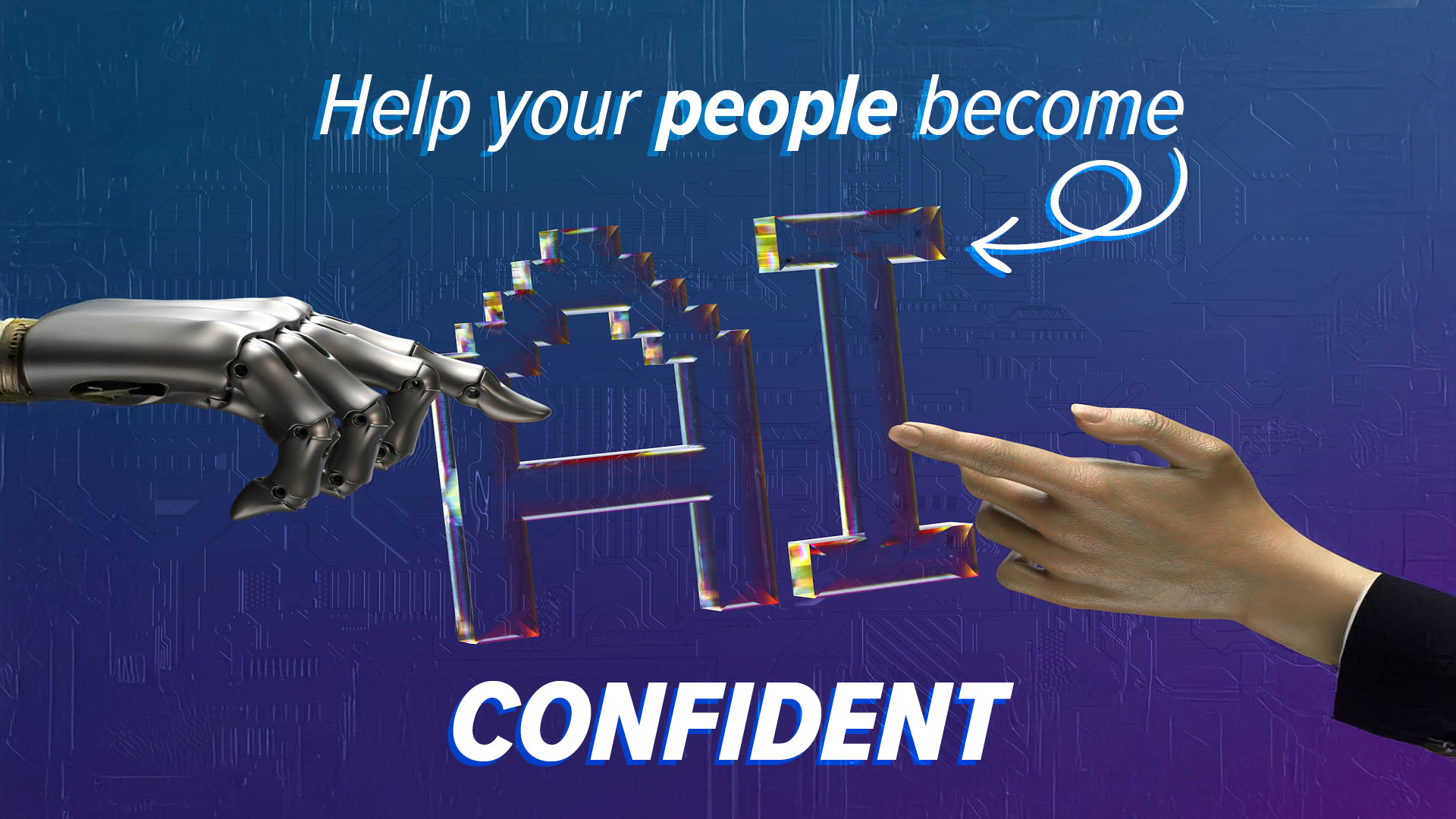
Be honest… how does your team really feel about AI at work?
Are they excited by the possibilities?
A little nervous about getting it wrong?
Or quietly using it while hoping no one notices?
They’re not alone.
Recent research shows just how deeply AI has already embedded itself into everyday work. Around four in five employees now use some form of AI in their role, and more than half rely on AI assistants to save time and get work done faster.
Yet despite all that usage, confidence is still lagging behind.
Many employees worry that using AI makes them look lazy, less capable, or overly dependent on technology. Some even feel judged or second-guessed by colleagues when they admit they use it.
So we end up in a strange place:
People trust AI to help them work better… but don’t always trust how other people will react to them using it.
And that’s a problem.
AI isn’t replacing people — it’s supporting them
AI works best when it’s treated as a partner, not a shortcut. It’s there to handle the repetitive, time-consuming tasks so your people can focus on what humans do best: thinking strategically, solving problems, and being creative.
But that only works when people feel confident and supported.
Right now, many businesses are falling short.
Only one in three employees has received any formal AI training. Most are left to figure things out through trial and error. That uncertainty can lead to mistakes, hesitation, and mistrust.
Unsurprisingly, confidence is uneven. Around 70% of managers say they feel comfortable using AI, but among junior staff, that number drops to roughly a third.
Confidence starts with culture
The solution isn’t more tools. It’s culture.
Business owners and leaders need to actively create an environment where experimenting with AI is encouraged — not judged. Where curiosity is rewarded, not questioned.
Your team needs to hear this clearly:
Using AI isn’t cheating. It’s smart working.
Confidence grows when people are given permission to learn out loud. That might mean:
- Offering basic AI training to remove fear and confusion
- Running internal workshops or lunch-and-learn sessions
- Encouraging simple “show and tell” moments where staff share how AI is helping them work more efficiently
When leaders model this behaviour themselves, it sends a powerful message: AI is part of how we work now — and that’s okay.
The payoff is worth it
AI confidence doesn’t happen overnight. But when people feel trusted and supported, something shifts.
You start to see better efficiency.
More creativity.
Less fear of change.
And most importantly, you build a team that’s ready for the future of work — not one that’s quietly worried about being left behind.
Because the real advantage of AI isn’t the technology itself.
It’s what happens when your people feel confident enough to use it well.