There was a time when scams were easy to spot.
Bad spelling. Strange graphics. Obvious red flags.
That time is gone.
Today’s scams are fast, polished, and increasingly powered by AI. They look legitimate. They sound convincing. And they’re designed to fool even careful, experienced professionals.
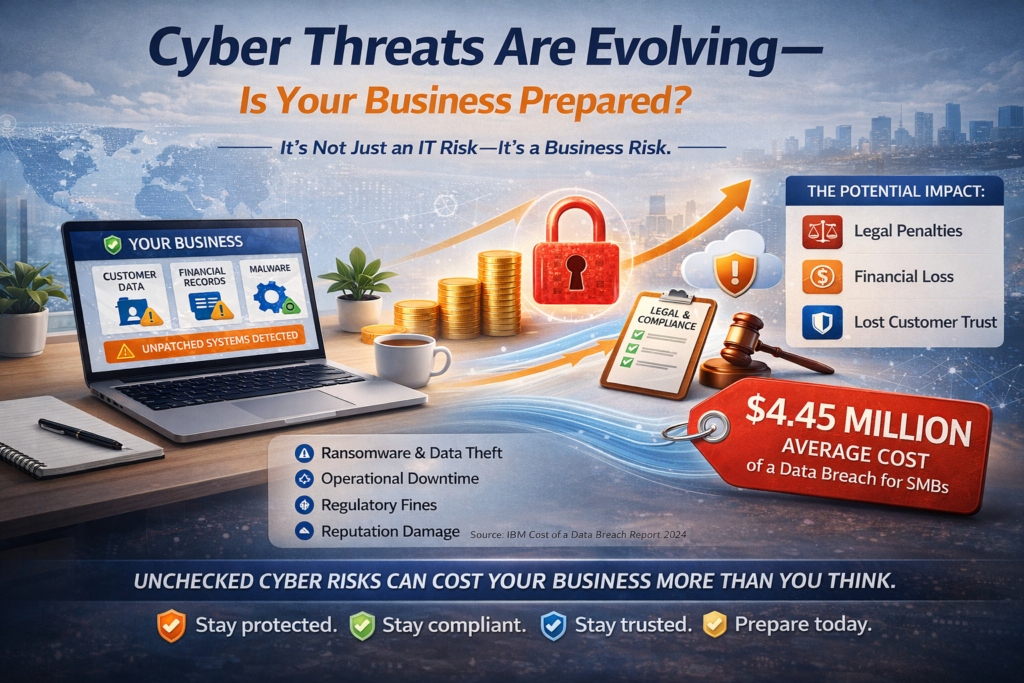
This isn’t just a personal risk anymore.
It’s a business risk.
The New Reality: Always On, Always Targeting
Scammers don’t wait for holidays. They don’t follow business hours.
It could be:
- A fake invoice request on a Tuesday morning
- A “missed delivery” text during lunch
- An urgent account alert late in the day
Every moment is an opportunity—and they know it.
Which means your team needs to be ready all the time, not just during “high-risk” periods.
Their #1 Tactic: Pressure
If there’s one thing modern scams have mastered, it’s urgency.
You’ve seen it:
- “Your account will be locked in 10 minutes”
- “Immediate action required”
- “Final notice”
- Countdown timers and flashing warnings
This isn’t accidental—it’s strategy.
Because the moment someone feels rushed, they stop thinking critically.
That’s when mistakes happen.
The Most Important Habit You Can Build
Train your team on one simple rule:
Stop. Think. Verify.
When something feels urgent or off:
- Stop – Don’t click. Don’t respond.
- Think – Does this make sense? Is it expected?
- Verify – Check through a trusted source
And here’s the key:
Never use the link or contact details in the message itself.
Go directly to the company’s real website. Call the official number. Log in through known, trusted channels.
Because scammers rely on tiny details—like a slightly misspelled domain—to trick people into trusting them.
What They’re Really After
Most scams boil down to two things:
Your money or your data.
That’s why the messages often revolve around:
- Banking issues
- Locked accounts
- Delivery problems
- Unexpected prizes or refunds
And here’s a rule worth reinforcing across your organization:
No legitimate company will ask for passwords, full banking details, or remote access through unsolicited emails, texts, or calls.
If they do—it’s a scam. Every time.
Awareness Isn’t Enough Anymore
Training matters. But on its own, it’s not enough.
You also need systems in place to catch what people miss.
The good news? The right tools make this straightforward:
- Multi-factor authentication (MFA)
Even if a password is stolen, attackers can’t get in - Password managers
Strong, unique passwords—without relying on memory - Regular updates and patching
Closing the vulnerabilities attackers actively exploit - Human vigilance
Caution and awareness to spot security dangers, phishing and others
These aren’t “nice to have” anymore.
They’re baseline protections.
The Overlooked Risk: Hidden Access
Here’s something many businesses forget:
Old devices and connected apps don’t always disconnect themselves.
If your team uses Google, Microsoft, or social logins across services, you could have:
- Old laptops still authorized
- Former staff or tools with lingering access
- Third-party apps connected to critical accounts
Regularly reviewing and cleaning this up is a simple step that can prevent major issues.
One Step Most Businesses Skip
Reporting scams.
It’s easy to ignore and move on. But reporting:
- Helps take down malicious websites
- Improves detection systems
- Protects other businesses from the same attack
It’s a small action with a big impact.
Report digital scams to the FTC https://reportfraud.ftc.gov or the FBI’s Internet Crime Center https://ic3.gov. You can also report identity theft https://identitytheft.gov.
Pro Tip: If you think you’ve been compromised, contact your bank and credit card companies. And lock or freeze your credit with Equifax, TransUnion, and Experian. Also consider using a credit monitoring service like Aura or LifeLock (do your own research).
Reducing Risk Isn’t Luck
Scams are getting smarter.
But they still rely on the same thing:
Human reaction.
When you combine:
- Awareness
- Clear processes
- The right security tools
You dramatically reduce your risk.
Is Your Team Prepared?
Because it only takes one click, one response, or one moment of pressure to create a serious problem.
We help businesses put practical protections in place—from user training to security controls—so your team can work confidently without becoming an easy target.
Let’s make sure your business isn’t the one that gets caught off guard.