AI is everywhere right now.
Every business conference, webinar, LinkedIn feed, and software vendor seems to be talking about it. And most business leaders already believe AI will play a major role in the future of their company.
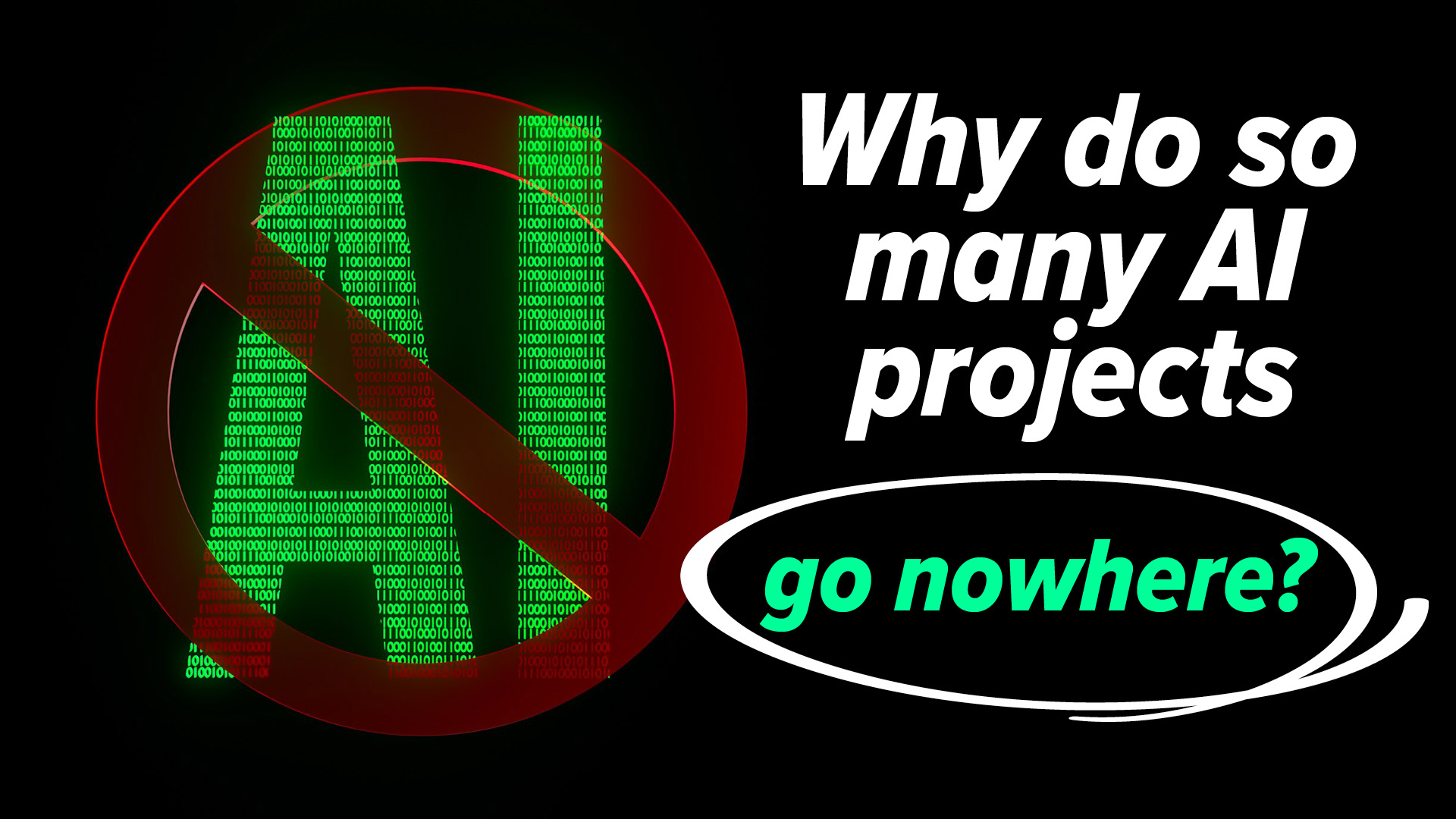
And yet, behind the scenes, a surprising number of AI projects are quietly going nowhere.
It usually starts the same way.
There’s excitement. Curiosity. A few demos. Maybe a pilot project. Teams experiment with tools like OpenAI ChatGPT or Microsoft Copilot. People see flashes of potential and start imagining major productivity gains.
Then momentum fades.
It’s that many businesses rush into AI without a clear idea of what success actually looks like.
Recent research suggests that around half of AI initiatives remain stuck in proof-of-concept mode, even while organizations continue increasing their AI spending. Security concerns, governance uncertainty, and unclear business outcomes are some of the biggest reasons projects fail to move into real operational use.
That tells us something important:
Businesses believe AI matters.
They just don’t always know how to implement it effectively.
The Real Reason AI Projects Stall
Most stalled AI projects have one thing in common:
Nobody clearly defined the business problem first.
- What problem is being solved
- What success looks like
- How results will be measured
- Who owns the process
- What guardrails need to exist
Without that clarity, projects drift.
Without a measurable goal, teams end up experimenting endlessly instead of implementing solutions that improve real business outcomes.
The companies seeing success with AI aren’t necessarily the ones with the biggest budgets.
They’re the ones solving practical problems.
Things like:
- Reducing repetitive help desk work
- Speeding up reporting and documentation
- Improving customer response times
- Strengthening system monitoring
- Automating routine administrative tasks
- Helping employees find information faster
Not flashy transformation.
Just measurable operational improvement.
That’s what creates momentum.
Fear and Governance Are Slowing Businesses Down
Another major reason AI initiatives stall is uncertainty around security, compliance, and risk.
And honestly, those concerns are valid.
Businesses are right to worry about:
- Sensitive company data entering AI tools
- Employees using unauthorized AI platforms
- Privacy and compliance exposure
- AI-generated inaccuracies or hallucinations
- Lack of accountability for decisions
Organizations like NIST and Microsoft have both emphasized the importance of AI governance and responsible implementation.
But here’s where many organizations get stuck:
Instead of creating reasonable guardrails, they wait for perfect answers.
That delay often kills progress entirely.
he reality is that AI governance doesn’t need to be overly complicated to start delivering value.
Most businesses simply need:
- Clear acceptable-use policies
- Defined approval processes
- Data handling guidelines
- Human review requirements
- Visibility into which AI tools employees are using
Simple guardrails create confidence.
And confidence allows adoption to move forward.
AI Still Needs Human Oversight
One of the biggest misconceptions about AI is that it’s fully autonomous.
It isn’t.
Not in real-world business environments.
Even the most advanced AI systems still require human oversight, validation, and decision-making.
That’s especially true in areas involving:
- Customer communication
- Financial reporting
- Security decisions
- Compliance-sensitive workflows
- Operational planning
Research from Deloitte shows that many organizations expect long-term collaboration between humans and AI rather than outright replacement.
And that’s a smart approach.
The businesses succeeding with AI today aren’t removing humans from the process.
They’re improving human efficiency.
How Businesses Successfully Move AI Forward
The organizations making real progress with AI usually follow a much simpler strategy than people expect.
1. Start With One Specific Outcome
Successful AI projects begin with a clear operational goal.
Not: “We want to use AI.”
But:
- “We want to reduce reporting time by 30%.”
- “We want to cut repetitive service desk tickets.”
- “We want faster internal documentation.”
- “We want to improve response times.”
Specific outcomes create measurable wins.
And measurable wins build internal support.
2. Define Human vs AI Responsibilities
One of the fastest ways to reduce organizational resistance is to clearly define:
- What AI is allowed to do independently
- What always requires human approval
- Who is accountable for oversight
That clarity removes fear and uncertainty for both employees and leadership.
3. Scale Gradually
The companies getting the most value from AI usually don’t roll it out everywhere at once.
They:
- Prove value in one department
- Refine the process
- Learn what works
- Expand carefully over time
That measured approach reduces risk while building organizational confidence.
AI Projects Don’t Fail Because AI Is Too Advanced
Most AI projects fail because the goals are too vague.
Businesses often approach AI as a technology initiative instead of an operational improvement initiative.
The organizations seeing real value are treating AI as a business tool:
- With clear objectives
- Defined guardrails
- Human accountability
- Measurable outcomes
That’s what turns AI from an experiment into something that actually improves the business.
If your AI initiatives feel stuck right now, the answer usually isn’t more tools.
It’s clearer goals, better governance, and the confidence to move forward — even before everything feels perfect.
Invisible AI
It’s worth noting: Shadow AI is everywhere. Even if your business isn’t consdering and AI project, employees are already using it.
- Writing emails and proposals
- Creating presentations and marketing content
- Analyzing spreadsheets and reports
Even these small and individual uses of AI require company oversight and guardrails – governance, to protect data, business identity, and ensure operational safety.
Discover who is using AI (trust me, it’s being used), why it’s used for, and what data AI has access to. It’s not about policing your team; it’s about education and safely empowering them to use AI with reasonable controls to reduce risk and optimize results.
Need Help Building a Practical AI Strategy?
If your business is exploring AI but struggling to move from experimentation to real operational value, we can help you build a practical, secure, and manageable approach.
From governance and acceptable-use policies to identifying realistic use cases and implementing AI safely, our team can help you move forward with confidence.