Here’s a question that should make every business leader stop and think:
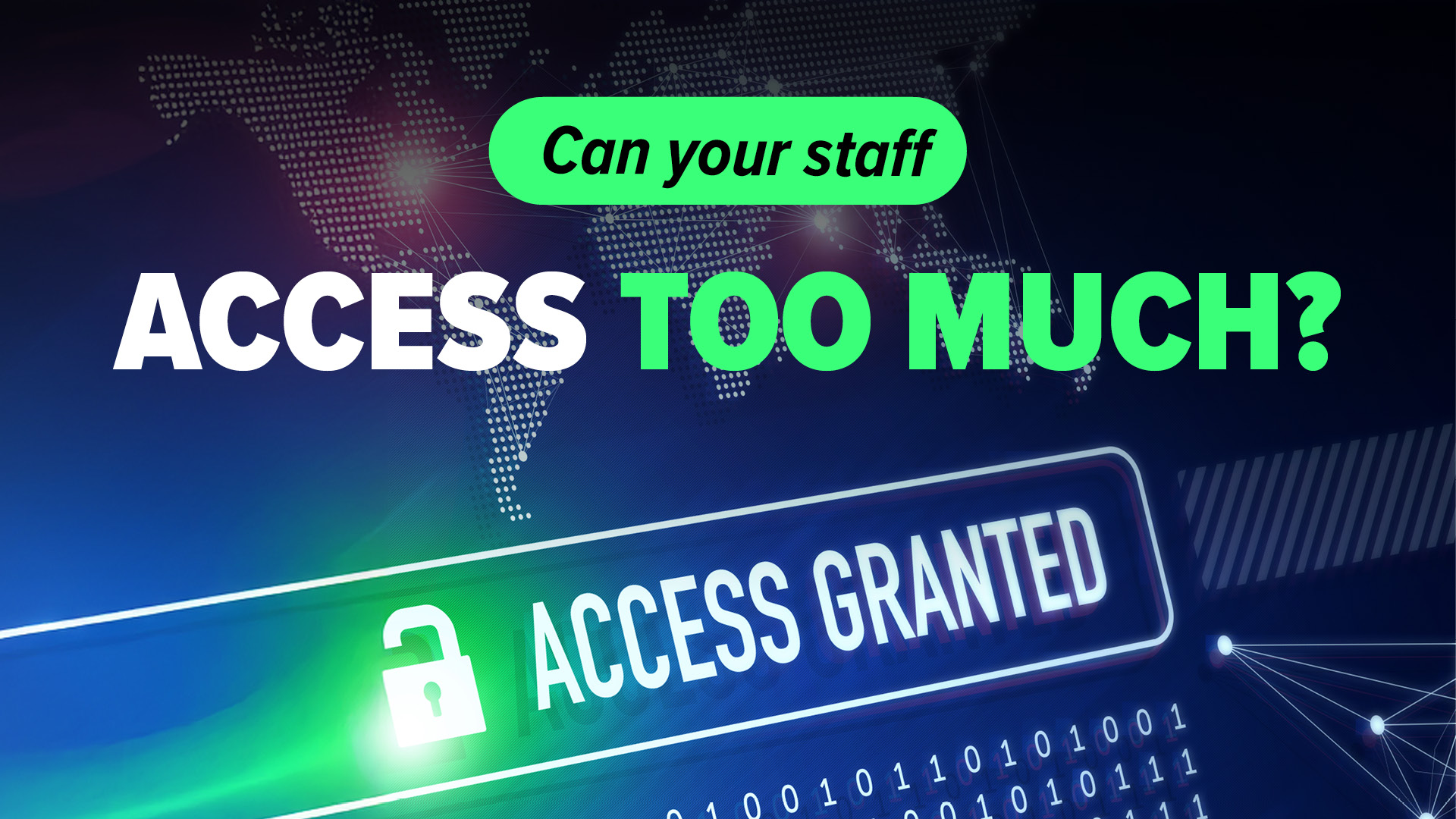
Do you know exactly who in your organization can access your critical business data right now?
And just as important — do they actually need that access?
If you’re like most managers or business owners, you probably assume this was handled long ago when accounts were first set up. Or you might think it’s just easier if everyone can access everything.
Those two assumptions can lead to disaster.
Roughly half of all employees have access to far more data than their roles require.
That’s not just a security issue — it’s a business risk.
Why It Matters More Than You Think
When too many people can see too much, bad things happen.
Not necessarily out of malice, but because mistakes are inevitable. An employee sends a file to the wrong person. Someone clicks a suspicious link. Or a staff member who left months ago still has access to shared folders and cloud apps.
Everyone with access to data also exposes that data. Even if you trust your team, one wrong move can by anyone now impacts everyone.
That’s what’s known as insider risk — any risk that comes from within your organization.
It can be intentional (like data theft), but far more often, it’s accidental. And it’s costly.
The Hidden Threat: “Privilege Creep”
Over time, employees take on new responsibilities, get added to more systems, and rarely lose old permissions. It’s called privilege creep, and it’s one of the most common ways sensitive data ends up exposed.
The research shows only a small fraction of businesses actively manage this.
(“IT Elmo” shaking his head in disbelief).
Worse, nearly half admit that former employees still have access to company systems months after leaving (even more concerning, even former IT providers with admin rights still have access long after termination). That’s like giving an ex-employee the keys to your building and never changing the locks.
How to Fix It: Adopt a “Least Privilege” Approach
The most effective way to reduce insider risk is through least-privilege access — making sure people can only access what they truly need, and nothing more.
A few practical steps:
- Limit permissions to job-specific data only.
- Use “just-in-time” access, granting temporary permissions for special projects.
- Revoke access immediately when someone changes roles or leaves.
- Review permissions regularly — don’t assume yesterday’s setup still makes sense.
- Automate where possible, especially in cloud environments.
- Work with groups – Always best to assign permissions to groups instead of individuals.
Protecting Productivity and Security
This isn’t about slowing your team down — it’s about protecting what matters most:
your data, your customers, and your reputation.
In today’s world of cloud apps, AI tools, and “shadow IT,” visibility and control have never been more critical. One way businesses reduce their risk is by making security and access management a continuous process, not a one-time task.
(IT Elmo gives this two thumbs up.)
If you’re not sure who has access to what in your systems, it’s time to find out — before a breach or audit does it for you.
Don’t wait until it’s too late. Need help reviewing your access controls or tightening your security posture?
Let’s talk. A quick audit today could save you a major headache tomorrow.