It sounds ridiculous at first.
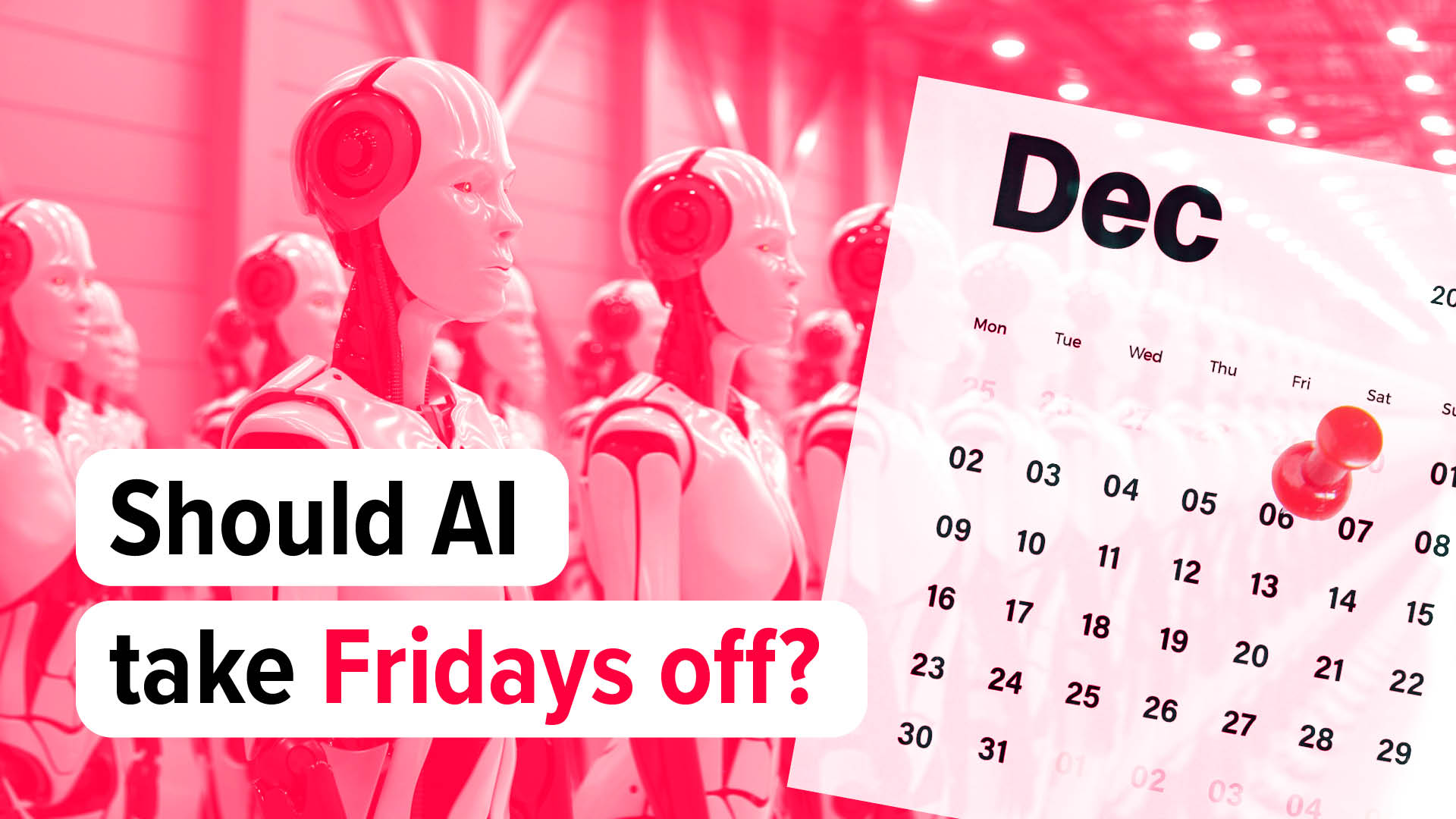
“No AI after lunch on Fridays.”
But think about what your office is like at 4:30 on a Friday afternoon.
People are tired. They’re finishing the last few things on their list. They’re thinking about the weekend. And they’re probably a little more willing to hit Send without reading something one last time.
Now add artificial intelligence to the equation.
Tools like Microsoft Copilot can produce a polished email, summarize a document, or generate a customer response in seconds.
That’s incredibly useful.
It also makes it incredibly easy to think:
“Looks good to me.”
And send it.
So, should New Jersey businesses really consider banning AI on Fridays?
Probably not.
But the idea raises a much more important question:
Are your employees reviewing what AI produces—or simply trusting it because it looks professional?
That’s the real risk.
AI Can Sound Confident Even When It’s Wrong
One of AI’s greatest strengths can also be one of its biggest weaknesses.
It produces polished results.
An AI-generated email usually doesn’t look unfinished. It may be grammatically correct, professionally formatted, and written with complete confidence.
That appearance can make us less likely to question it.
But professional-looking doesn’t necessarily mean accurate.
AI can misunderstand context, omit important details, choose the wrong tone, or confidently produce information that isn’t correct.
The original article highlights exactly this problem: when employees are tired or rushing to finish the week, polished AI output can be particularly easy to accept without giving it a proper second look.
The Friday Afternoon Problem Isn’t Really About Friday
Friday simply makes the issue easier to see.
The same thing happens whenever employees are:
- Rushing to meet a deadline
- Multitasking
- Working through a large backlog
- Distracted
- Mentally tired
- Trying to get through repetitive work quickly
AI removes friction from many tasks.
Normally, that’s exactly what we want.
But removing friction can also remove the moment when someone stops and thinks:
“Does this actually make sense?”
That’s why businesses adopting AI need to think about something beyond the technology itself.
They need to think about human behavior around the technology.
Don’t Let “AI Said It” Become Good Enough
Imagine an employee asks Microsoft Copilot to draft a response to an important client.
Copilot produces something polished.
The employee reads the first sentence, scans the rest, and sends it.
But perhaps the message contains an incorrect assumption.
Or the tone is technically professional but completely inappropriate given the customer’s situation.
Maybe it references information that shouldn’t have been included at all.
None of these mistakes require a dramatic AI failure.
They only require an employee to trust the output a little too much.
And that’s the danger.
As employees become accustomed to AI producing good results, they can gradually stop challenging those results.
Instead of asking: “Is this correct?”
The thought process becomes: “That looks correct.”
Those are two very different standards.
AI Should Be an Assistant, Not the Final Decision Maker
There’s a simple principle businesses can establish:
AI creates the first draft. A person approves the final version.
This is particularly important when AI-generated content leaves your organization.
That includes:
- Customer emails
- Proposals
- Contracts
- Financial information
- Marketing content
- HR communications
- Client reports
- Legal or compliance-related documents
The higher the potential impact of a mistake, the more human oversight there should be.
That doesn’t eliminate the productivity benefits of AI.
It protects them.
What About “AI Fatigue?”
The source article also raises an interesting concept: AI fatigue.
Employees aren’t simply asking AI a question once or twice each day anymore.
They may be interacting with AI constantly—generating, reviewing, correcting, prompting, checking, and deciding whether outputs are usable.
Over time, there’s a danger that people become less critical of what they’re seeing.
That’s especially important for businesses implementing Microsoft Copilot or other AI tools across an entire organization.
Giving employees AI access is easy.
Developing good habits around it takes more work.
New Jersey Businesses Need an AI Acceptable Use Policy
You probably don’t need a “No AI Fridays” rule.
But you should consider having a written AI acceptable use policy. Employees need practical guidance about questions such as:
What AI tools can employees use?
Your organization should determine which AI platforms are approved for business use. Employees shouldn’t be making that decision individually.
What information can be entered into AI?
Employees need to understand whether customer information, financial records, internal documents, intellectual property, passwords, or other sensitive data can be shared with an AI service.
What must employees review?
Make it clear that AI-generated work isn’t automatically approved simply because the output looks finished.
When is human approval required?
High-impact decisions and external communications may require a person to review the final output.
Who should employees contact with questions?
Employees shouldn’t have to guess. Give them someone to ask before putting sensitive information into an unfamiliar AI platform.
Five AI Rules Every NJ Business Can Start With
You don’t need a 50-page AI policy to begin establishing better habits.
Start with five straightforward expectations:
- Use company-approved AI tools for company work.
- Don’t enter confidential information into unapproved AI platforms.
- Verify important facts rather than assuming AI is correct.
- Review AI-generated communications before sending/publishing them.
- Keep a human responsible for the final decision.
The goal isn’t to make employees afraid of AI.
It’s to make thoughtful AI use part of the company culture.
AI Should Make Your Team Better—Not Less Attentive
Artificial intelligence can save employees enormous amounts of time.
It can eliminate repetitive work, help people communicate more effectively, summarize information, and make knowledge easier to access.
Businesses should absolutely be exploring those opportunities. But productivity shouldn’t come at the expense of judgment.
The more capable AI becomes, the more important it is that employees understand where its responsibility ends and theirs begins.
So no, you probably don’t need to shut down Microsoft Copilot every Friday afternoon.
But maybe Friday at 4:30 is a useful reminder:
AI may be able to create the work. Your employees still need to own it.
Build an AI Strategy That Works for Your Business
AI adoption is moving incredibly quickly, and many organizations are trying to figure out the rules while their employees are already using the technology.
At ONE2ONE Tech Solutions, we help New Jersey area businesses make smarter technology decisions—from Microsoft 365 and cybersecurity to developing practical policies around emerging tools like AI.
The objective isn’t to prevent your team from using AI.
It’s to give them the right tools, appropriate safeguards, and clear expectations so they can use it productively without creating unnecessary business risk.
If your employees are already experimenting with AI but your business hasn’t established the rules yet, now is a good time to start.
Related Articles
- It’s Time to Govern Your Team’s AI Use (Before It Governs You)
- How to Stop AI Projects From Stalling
- 80% of Malware Now Uses AI – That Should Motivate Every Business
- AI Agents Could Be Creating Hidden Security Risks for Your NJ Business
- Is Your Business Ready to Shut Down AI in an Emergency? Why Every NJ Company Needs an AI Governance Plan